There is a question that almost nobody asks because the answer feels too dangerous: What if the economy was designed to make people happy? Not productive. Not efficient. Not competitive. Happy. The question sounds naive — and that reaction itself is the most damning evidence of how deeply the current system has colonized our imagination. We cannot even conceive of an economy that serves joy because we have been trained, from childhood, to believe that suffering is the price of survival.
But joy is not a luxury. It is not something you earn after decades of grinding. It is not the reward at the end of a career. Joy is the natural state of a human being who is not being crushed. Children know this instinctively — they do not need to be taught how to laugh, how to play, how to find wonder in the ordinary. What they need to be taught, carefully and systematically, is how to stop. How to sit still. How to worry. How to compete. How to measure their worth in numbers. The economy teaches them this. HoloBank is what happens when you stop.
The Economy of Extraction
The financial system that governs the modern world was not designed with human happiness as a variable. It was not even designed with human survival as a priority. It was designed to extract. Every mechanism in the system — from debt creation to compound interest, from credit scores to overdraft fees — exists for one purpose: to move value from the many to the few. This is not a conspiracy. It is simply the logic of the architecture.
Consider what the average person experiences in a lifetime of participation in this system. They are born into a world where housing costs more than a decade of labor. They take on debt to get an education that qualifies them for a job that pays just enough to service that debt. They rent or mortgage a home, paying two or three times its value over the life of the loan. They save in a currency that loses purchasing power every year. They are sold insurance against catastrophes that the system itself creates. And when they reach the end — if they reach the end with anything left — they are told they were one of the lucky ones.
This is not an economy. It is a harvesting operation. And the thing being harvested is not just money — it is time, energy, creativity, health, relationships, and joy. The system takes everything that makes a human life worth living and converts it into profit for institutions that will never know your name.
The cruelest trick of the extraction economy is not that it takes your money. It is that it takes your joy — and then sells you back a cheap imitation at a markup.
Entertainment, vacations, luxury goods, self-care products — these are the system's version of joy, packaged and priced. You work fifty weeks to afford two weeks of feeling alive. You sacrifice your health to earn money, then spend that money trying to recover your health. The extraction never stops. It just changes form.
The current financial system does not just extract money — it extracts joy, creativity, time, health, and human connection. Everything that makes life worth living is converted into institutional profit. The suffering is not a bug; it is the core function of the architecture.
Joy as a Radical Act
In a system designed for extraction, the most dangerous thing a person can do is be genuinely happy. Not the performative happiness of social media, not the consumer happiness of a new purchase, but the deep, settled joy of a person who is free. The system cannot process this person. They do not respond to fear-based marketing. They do not take on debt to fill an emotional void. They do not sacrifice their health for a promotion. They are, in every meaningful sense, outside the machine's reach.
This is why the system works so hard to prevent joy. Not through explicit prohibition — that would be too obvious — but through the constant manufacture of anxiety. Will you have enough for retirement? What if you lose your job? What if your children cannot afford college? What if the market crashes? The questions never stop, and they are designed to keep you in a perpetual state of low-grade fear that makes you compliant, productive, and consumptive.
Choosing joy in this context is not selfish. It is revolutionary. Every person who steps out of the anxiety cycle and into genuine happiness removes themselves from the extraction pipeline. They stop buying things they do not need. They stop working jobs that destroy them. They start building relationships, creating art, growing food, raising children with presence instead of panic. The system does not fear your anger. It fears your joy. Anger can be channeled, co-opted, monetized. Joy cannot.

The Productivity Trap
The extraction economy did something remarkably clever: it redefined human value as economic output. Your worth is your salary. Your contribution is your GDP impact. Your time is only valuable when it is being converted into money. Rest is laziness. Play is wasted potential. Joy that does not produce a measurable economic outcome is indulgence.
This redefinition is so complete that most people feel guilty when they are not being productive. They cannot sit in a park without checking their phone. They cannot take a week off without anxiety. They cannot watch their children play without calculating the opportunity cost. The system has colonized their inner life so thoroughly that even their leisure is infected with the logic of extraction — every moment must be optimized, every experience must be documented, every hobby must have the potential to become a side hustle.
The productivity trap is the deepest layer of the extraction economy because it turns people into their own overseers. You do not need a boss standing over you when you have internalized the belief that your worth depends on your output. The machine runs itself through the people it has programmed. Breaking free requires something more fundamental than a raise or a vacation — it requires a completely different understanding of what a human life is for. And that is precisely what the HOLO ecosystem provides: an architecture where your value is inherent, not earned through production.
The extraction economy redefined human value as economic output, making rest and joy feel like guilt. People have become their own overseers, unable to experience happiness without calculating its cost. Breaking this cycle requires a new financial architecture that does not equate human worth with productivity.
What an Economy of Joy Looks Like
Strip away the extraction. Remove the debt. Eliminate the artificial scarcity. Stop punishing people for existing. What remains? What do humans do when the financial boot is lifted from their neck? The answer is not theoretical — we can see it in every moment where the pressure briefly lifts. People create. They connect. They explore. They rest. They laugh. They raise their children with presence. They build things that matter to them, not things that matter to a market.
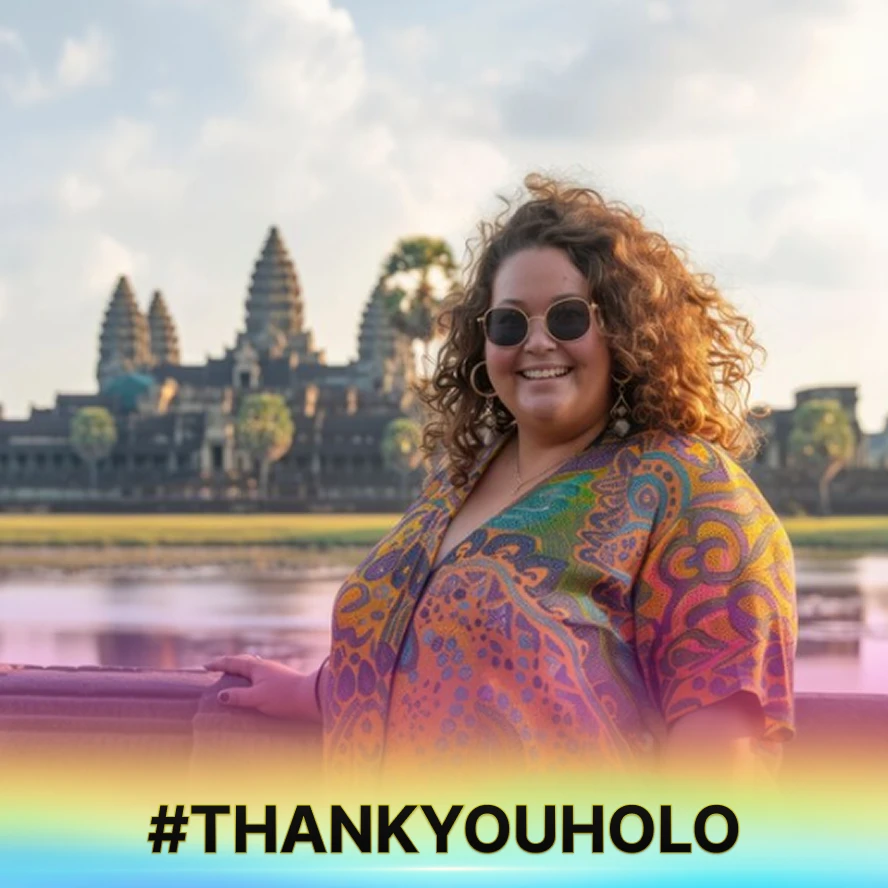
An economy of joy is one where a woman travels to Angkor Wat not because she is escaping her life, but because she is extending it — driven by genuine curiosity about how other humans have lived, built, and worshipped across centuries. She is not on a two-week vacation from misery. She is a free person exploring her world, with the financial foundation to do so without anxiety, without debt, without the clock ticking on her return to the machine.
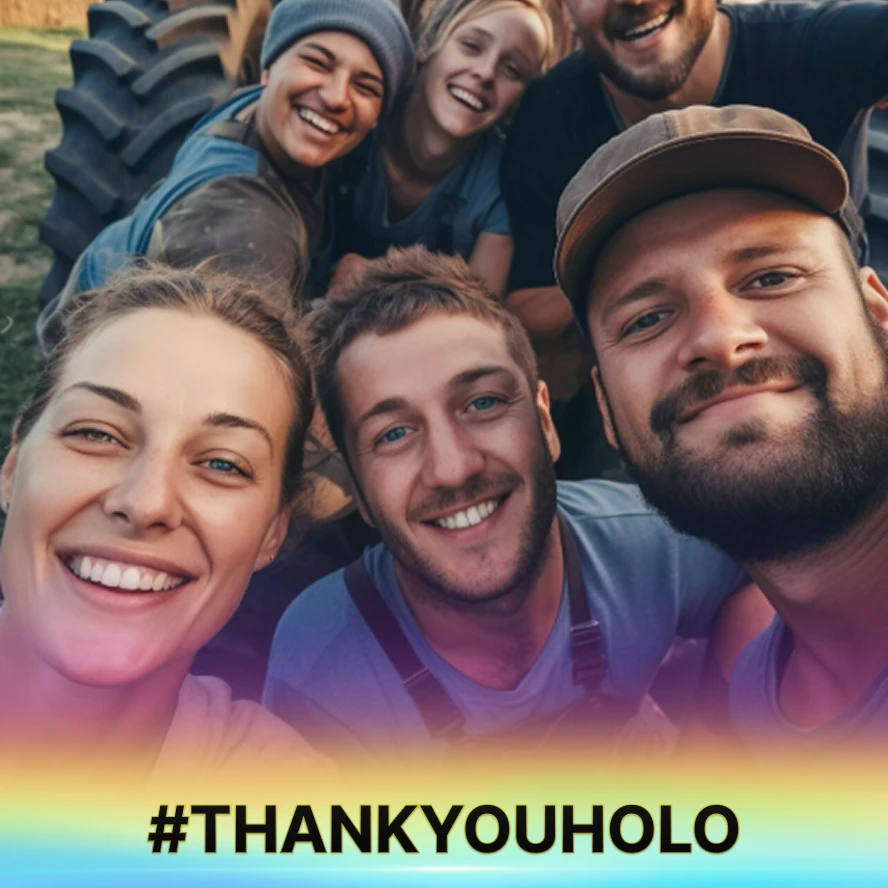
An economy of joy is one where a group of friends works the land together — not because they are struggling to survive, but because growing food with people you love is one of the most deeply satisfying things a human being can do. Community is not a networking strategy. It is not a professional development opportunity. It is the fundamental unit of human happiness, and an economy built for joy puts it at the center rather than the margins.
An economy of joy is one where a young man puts on headphones and makes music on a rooftop — not because he is trying to go viral, not because he is building a brand, but because creative expression is as natural and necessary as breathing. In the extraction economy, art that does not sell is considered worthless. In the economy of joy, art that comes from a free soul is considered priceless — regardless of whether anyone else ever hears it.
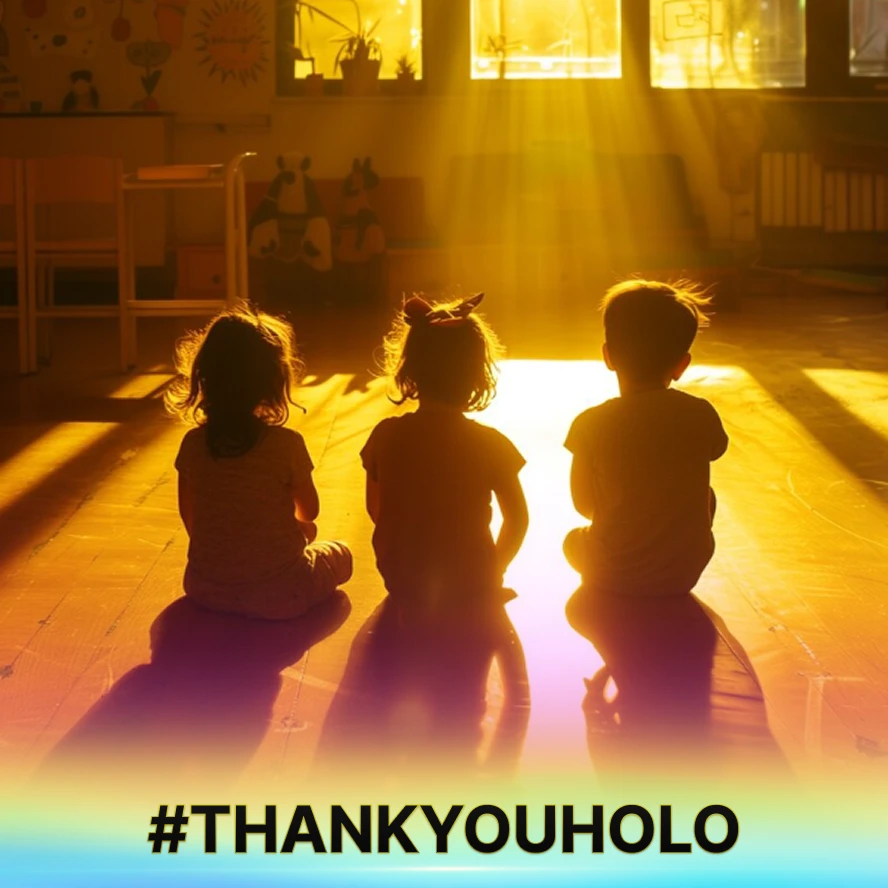
And most importantly, an economy of joy is one where children grow up in happiness. Not the manufactured happiness of consumer products and screen time, but the real, embodied happiness of a child who feels safe, who is surrounded by present adults, who has space to play, to wonder, to be bored, to discover. A child who is not being prepared for the machine but is being allowed to become fully human. This is not utopia. This is what happens when you stop actively preventing it.
HoloBank: The Infrastructure of Joy
Joy requires material conditions. This is the part that dreamers often miss and that cynics use to dismiss the entire vision. You cannot tell a person drowning in debt to "choose joy." You cannot tell a family facing eviction to "find gratitude." The spiritual bypassing of material reality is just another tool the extraction economy uses to keep people compliant — if your suffering is a mindset problem, then the system that created it bears no responsibility.
HoloBank does not deal in mindset. It deals in architecture. It creates the material conditions where joy becomes possible — not through positive thinking, but through the elimination of the mechanisms that produce suffering. This is the difference between a self-help book and an infrastructure revolution.
The architecture is specific:
- No extraction — zero fees for accessing your own capital, no hidden charges, no value being siphoned at every touchpoint
- No debt creation — the time-anchored currency in HoloBank is not created through lending, it carries no interest burden, and it does not require someone else's loss for your gain
- Sovereign capital — your money is under your exclusive control, not held in an institution's balance sheet where it can be frozen, seized, or gambled with
- Time-anchored value — the currency does not inflate away, meaning your savings actually hold their worth, eliminating the constant anxiety of purchasing power erosion
- Peer-to-peer movement — value moves directly between people, instantly, without intermediaries taking a cut at every step
Each of these features removes a specific source of financial suffering. Together, they create something that has never existed before: a financial layer where the default experience is not stress but freedom. When your money is safe, when it holds its value, when no one can take it from you, when you can move it freely — the chronic background anxiety that the extraction economy depends on simply dissolves. And in the space where that anxiety used to live, something else moves in. Something the system tried very hard to kill. Joy.
This is what banking without banks actually means in practice. Not just the absence of institutions, but the presence of something better — a financial infrastructure that was designed, from the ground up, to serve human flourishing rather than institutional profit.
HoloBank creates the material conditions for joy through specific architectural choices: no extraction, no debt, sovereign capital, time-anchored currency, and peer-to-peer transactions. Joy is not a mindset — it is the natural result of removing the mechanisms that produce financial suffering.
The World That Laughs
Imagine a generation of children who never learn financial anxiety. Who grow up in households where money is a tool, not a threat. Where their parents are present — not because they read a parenting book about mindfulness, but because the economic structure of their lives does not require them to sacrifice their family for their survival. These children will not need therapy to unlearn the scarcity mindset. They will not carry the tension in their shoulders that their grandparents accepted as normal. They will laugh more easily. They will trust more readily. They will create more freely.
This is not idealism. This is the predictable outcome of removing the cause of the disease. Financial stress is the leading driver of anxiety, depression, divorce, domestic violence, substance abuse, and suicide in the developed world. It is not one problem among many — it is the root problem from which most others grow. An economy that eliminates financial stress does not just improve economic indicators. It transforms every dimension of human life.
The world that laughs is a world where people travel to understand each other, not to escape themselves. Where communities form around shared purpose, not shared desperation. Where art is made because the soul demands it, not because the algorithm rewards it. Where rest is honored, not punished. Where the elderly are cared for by people who have time to care, not warehoused in institutions funded by guilt and obligation.
HoloBank does not promise this world. It builds the foundation. The financial layer is not the whole house — but without it, the house cannot stand. Every beautiful vision of human potential collapses without the material conditions to support it. HoloBank, within the HOLO ecosystem, provides those conditions. What humanity does with the freedom is up to humanity. But if history is any guide, what humans do when they are free — when they are genuinely, materially, structurally free — is they create beauty. They build community. They raise extraordinary children. They laugh.
The extraction economy produced the wealthiest civilization in human history and the most anxious, medicated, and lonely population ever recorded. Those two facts are not contradictory — they are cause and effect. Wealth without joy is not prosperity. It is a more comfortable form of suffering. The economy of joy does not reject wealth. It rejects the architecture that converts wealth into suffering. And in doing so, it returns something that no amount of money could ever buy back from the old system: the simple, radical, world-changing experience of a human being who is free enough to laugh.
.webp)
.webp)
.webp)